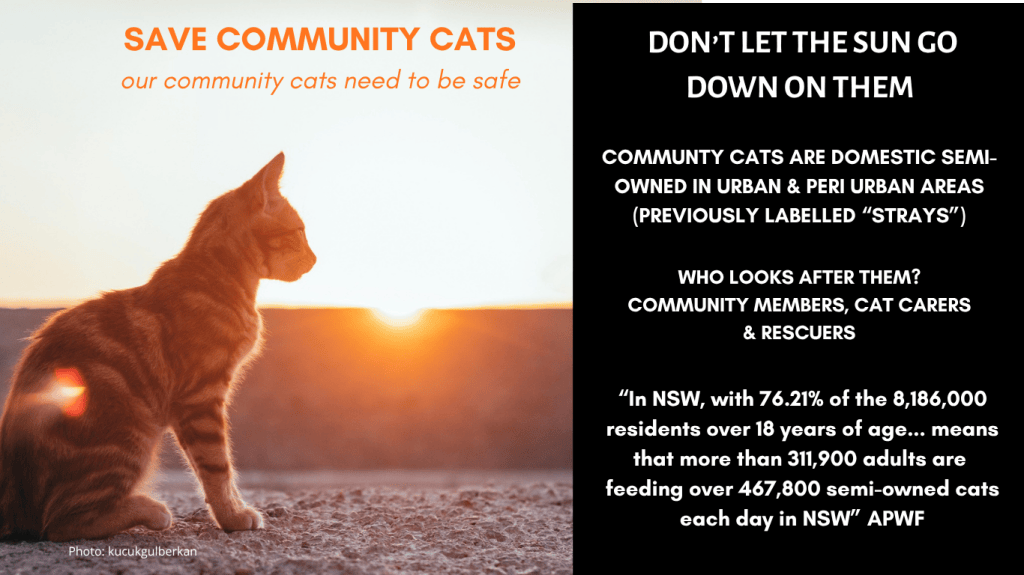
ACT NOW TO SAVE OUR NSW STRAY / COMMUNITY CATS FROM MASS CONVENIENCE CULLING
Support the NSW Inquiry Management of Cat Populations & object to the Control of Cats Bill
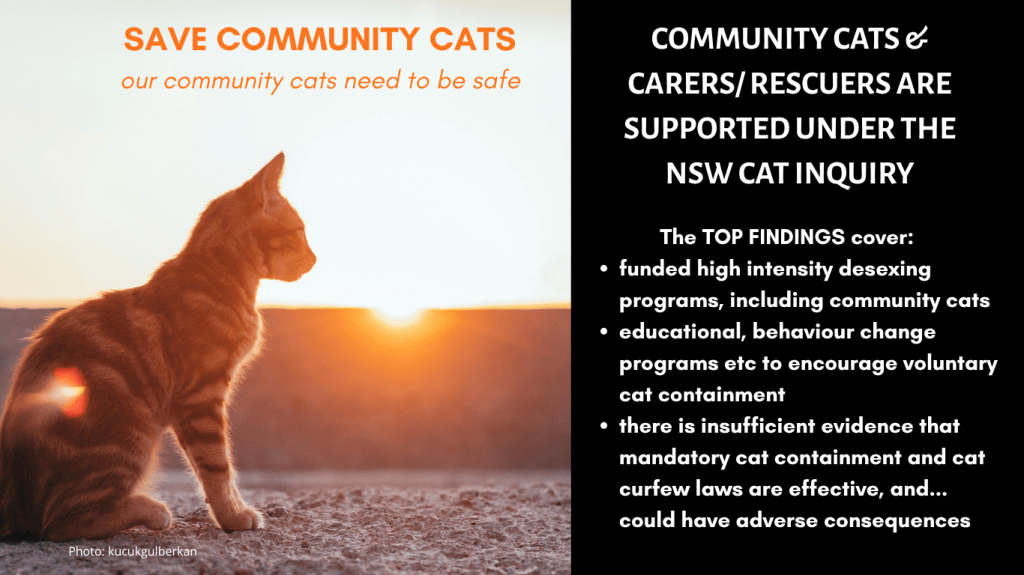
Be inspired to ACT SMART ACT NOW to speak out for community cats
We call on animal advocates around the world to unite with us to
- support the state government of New South Wales, Australia in implementing its world-leading Cat Inquiry encompassing scientific evidence and proven humane and effective solutions including funded desexing programs and voluntary rather than mandatory cat containment
- object to the Greens NSW Control of Cats Bill which has many negative consequences and is open to high intensity convenience culling of roaming unchipped cats including many community cats
- raise the science and cost effectiveness of funded desexing & voluntary cat containment to all 128 NSW councils, say “no” to mandatory cat containment due to the range of negative consequences.
IN THE FOLLOWING SECTION, SEE OUR 3 EASY WAYS TO HELP
SAVE HUNDREDS OF THOUSANDS OF CATS EACH YEAR WHO ARE AT RISK ACROSS NSW
The Bill that is clearly aimed at mandatory cat containment with omitting a an approach to stray / semi owned and unowned cats, which likely implies:
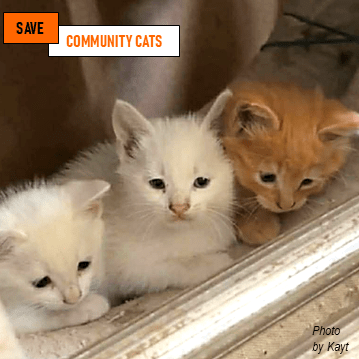
- shutting down ALL rehoming and rescue efforts, forcing ALL stray cats through antiquated, under-resourced council pounds, with under-trained staff
- mass euthanasia including semi owned community cats
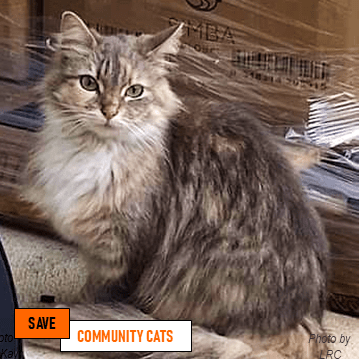
- encouraging an increase in harm and cruelty to all roaming cats by cat-hating vigilantes, trapping cats without adequate oversight or control
The NSW Cat Inquiry based on proven science, supported voluntary containment & NOT enabling mandatory cat containment at this time
The Cat Inquiry supported human behaviour change programs to significantly increase voluntary cat containment with effective community engagement to minimise impacts to wildlife.
These initiatives are already proven across a number of NSW councils. And being repeated across 30 councils in a second trial.
The Bill introduced by the Greens ignores Australian domestic cat science!
Mandatory cat containment implemented across Victoria for up to twenty years has been found ineffective. The Australian Pet Welfare Foundation research findings include high costs, punitive to low socio-economic communities, ineffectively addressing root causes, not ceasing roaming cats, likely increasing cruelty to cats.
Community cat rescuers and carers in other states and territories are still operating as there continues a need for their kind volunteer efforts.
Reported in May by the Australian Broadcasting Corporation, one of the largest shelters in Melbourne, Victoria is “receiving close to 100 cats and kittens a day — marking record numbers”.
- This equates to several hundred a week, thousands per month, and potentially around 30,000 for the year.
- In the past, on average they received collectively around 14,000 cats and kittens per year.
- In the past 5 years they collectively received over 43,000 unidentified cats, less than 9,000 on average per year.
- The new peak will far exceed these historical average numbers. Cost of living factors with increased breeding are NOT being addressed with mandatory cat containment, a punitive law.
EASY WAYS YOU CAN HELP
1. Sign our petition
2. Contact NSW Premier to support the Cat Inquiry & object to mandatory containment with likely mass culling of stray cats
The Inquiry Management of Cat Populations NSW is fully supported as it involves proactive scientifically proven One Welfare solutions. These include funding desexing initiatives and significantly improving cultural change through human behaviour change programs to rapidly increase responsible pet ownership and voluntary cat containment.
The Inquiry also included recommendations for solutions enabling and funding the cat rescue and rehoming organisations to support desexing, care and rehoming costs.
These are world-leading proven approaches in Australia and supported by similar evidence from other countries for successful cat management.
3. Object to the Control of Cats Bill with the authors
The Companion Animal Amendment Control of Cats bill introduced by Sue Higginson is not supported. Its gaps and negative consequences are a significant concern for stray / domestic semi owned and unowned cats in urban and peri urban areas. It appears to ignore the many thousands of human semi owners across NSW.
The Control of Cats bill appears to be contrary to the world-leading NSW Cat Inquiry:
- lacking humane management of the welfare of lost and stray cats
- ignoring the Australian domestic cat scientific evidence from a range of experts,
- ignoring the significant range of negative consequences involved with mandatory containment,
- lacking humanely managing the welfare of lost and stray cats,
- ignoring the specific One Solution approaches such as funded desexing and human behaviour change programs have been proven successful, while the archaic trapping and culling approaches are costly, not humane, nor effective,
- ignoring the mental and emotional impact to cat owners or semi owners, vets, council staff, and community members,
- ignoring the many Australian domestic cat experts who clearly indicated they do not support mandatory containment e.g. Royal Society for Prevention of Cruelty NSW and the Australian Pet Welfare Foundation based on their researched findings.
There are grave concerns for all roaming cats as Sue Higginson at the cat Inquiry hearings appeared to enquire about the potential for alternative methods for high intensity euthanasia – mass culling.
- “Do you think there might be a place for a different body or a different group of people who are very willing to undertake a public interest euthanasia service …that takes it away from the pressure of… private practice vets… ?”
- “a strategic specialist service to take that burden or that pressure away from vets… ?”
Watch our most recent rally video
Contact & Follow Us
Facebook : https://www.facebook.com/SaveCommunityCatsAustralia
Reference information
NSW Inquiry Management of Cat Populations https://www.parliament.nsw.gov.au/committees/inquiries/Pages/inquiry-details.aspx?pk=3011
Companion Animals Amendment (Control of Cats) Bill 2025 https://www.parliament.nsw.gov.au/bills/Pages/Profiles/companion-animals-amendment-control-of-cats-bill-2025.aspx
ABC Melbourne Facebook post 19 May 2026 Melbourne’s Lost Dogs Home animal shelter
APWF Submission NSW Inquiry Management of Cat Populations
https://petwelfare.org.au/government-submissions/new-south-wales
Australian Pet Welfare Foundation Position Paper on Cat Containment https://petwelfare.org.au/position-statements/cat-containment
Bella and Charlie Are Not the Problem – It’s Us: The Real Drivers of Wildlife Decline in NSW https://www.preprints.org/manuscript/202604.1191
Evaluating the Effects of Managed Free-Roaming Cat Populations on Prey Through Stable Isotope Analysis: A Pilot Study from British Columbia, Canada https://www.mdpi.com/2076-2615/15/21/3204?

